Why Slabs Give You the Ultimate Luxury
Fewer joints, veining that never breaks, and porcelain that asks nothing of you. Why large-format slabs are the surface that makes a room feel finished.
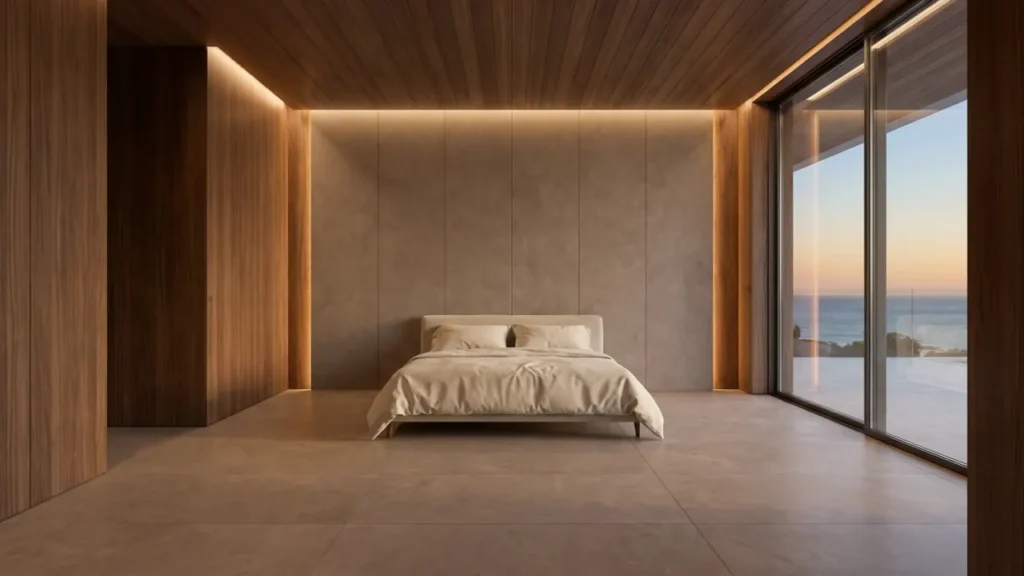
Walk into any room that feels expensive and look at the floor and the walls. What you will rarely see is a grid. Luxury in a surface is less about the material than about how little interrupts it – and nothing interrupts a surface less than a slab.
Fewer joints, more stone
A single 1200 × 1800 mm slab covers 2.16 square metres – the area of six 600 × 600 mm tiles. A 1200 × 3200 mm slab covers 3.84 square metres in one piece, enough to run from floor to ceiling in most rooms without a single horizontal joint.
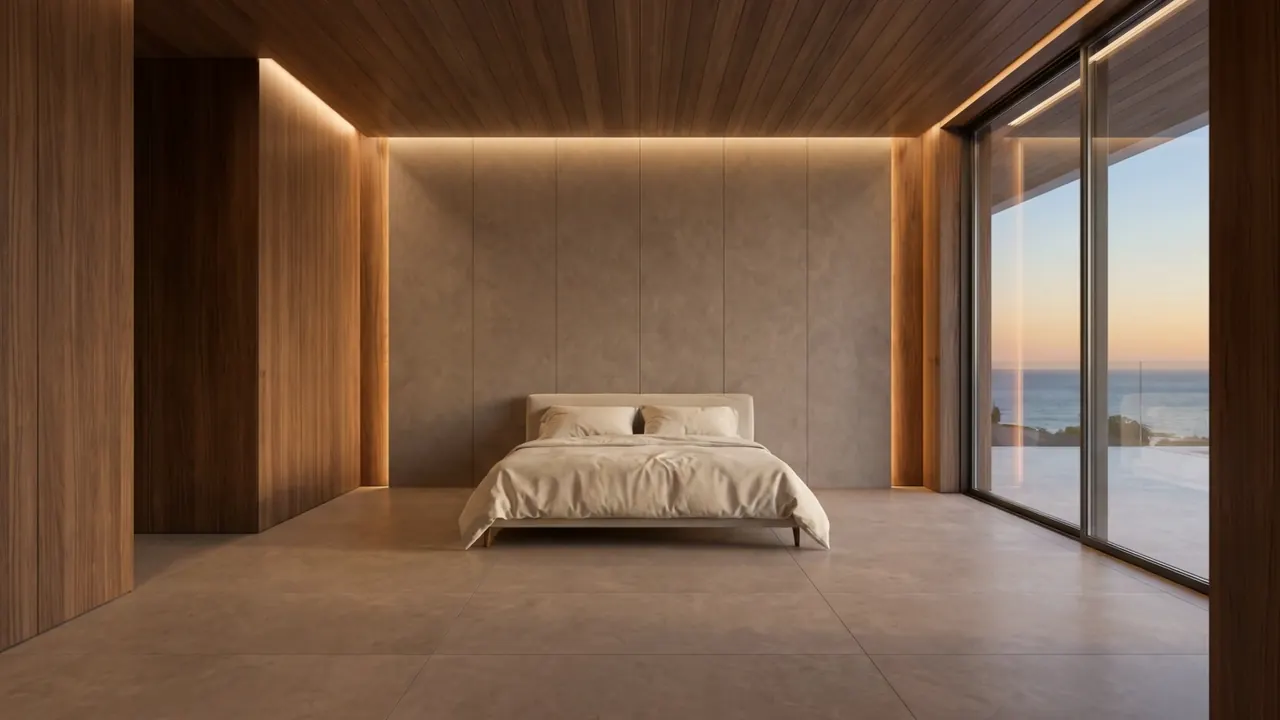
Every joint you remove is a grout line you do not see, clean or reseal. On a wall it means one continuous face. On a floor it means the eye travels across the room instead of counting squares. That calm is the first thing people notice, even when they cannot say why.
The vein keeps going
Marble is prized for its veining, and veining needs room. Cut a marble pattern into small tiles and every vein stops at the edge of the tile, then restarts – slightly wrong – on the next one. On a slab it can run its full length, the way it does in a quarried block.
Large formats also make book-matching possible: two consecutive slabs laid as mirror images, so the pattern opens across the joint like the pages of a book. It is the feature wall you see in hotel lobbies and flagship stores, and it only works when each piece is big enough to carry a whole composition.
Porcelain does the hard work
Natural marble is beautiful and demanding. It is porous, it etches under lemon juice and wine, and it needs sealing. Porcelain slabs are pressed from refined clays and minerals and fired at around 1,200 °C until the body is dense and nearly glass-like. Porcelain of the highest class absorbs less than 0.5 per cent of its weight in water. In practice that means:
- Stains stay on the surface and wipe off, with no sealing, ever.
- Heat and UV do not mark it, so a slab works beside a hob, on a sunlit terrace or in a steam room.
- The colour runs through consistently from the first slab of a batch to the last, so a large project reads as one surface.
Luxury that has to be protected from the people living with it is only half a luxury. A porcelain slab gives you the look of stone without the rules.
One material, the whole room
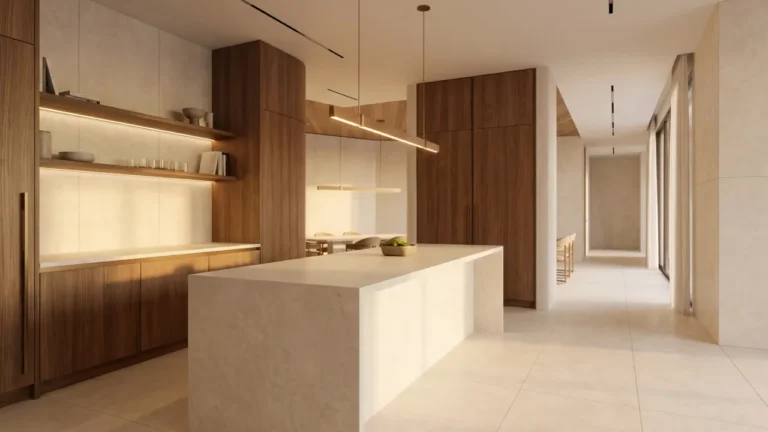
Because slabs come large and consistent, one design can carry an entire space: the floor, the walls, the shower, a vanity top, a kitchen island, even a dining table. Using a single surface across all of them is what gives the best interiors their quiet, finished feel – nothing competes, and every edge belongs to the same idea.
Finish changes the mood without changing the material. A polished slab reflects light and deepens the veining; a matt or honed slab is soft underfoot and hides fingerprints; a structured surface adds grip and texture for bathrooms and outdoor areas.
Why the scale is hard to make
Anyone can make a small tile. Making a slab 3 metres long that is flat, true in colour and square to the millimetre takes a different kind of plant: continuous pressing, long kilns with tightly controlled firing curves, and cutting and calibration lines built for the size. That difficulty is part of what you are paying for – and part of why a well-made slab looks the way it does.
Is a slab right for you?
Slabs suit projects where the surface is meant to be seen: living spaces, feature walls, open kitchens, hotel and retail interiors, and bathrooms where fewer joints mean fewer places for water and dirt to settle. They need skilled installers and careful handling, so plan the layout with your fixer before you order.
If you want a room that feels finished the moment you walk into it, start with the biggest, calmest surface you can – and let it run.